North Carolina Sports Betting Booms in March 2026: GGR Doubles as Hold Rates Climb
Written by Vera Russell · Apr 13, 2026

North Carolina Sports Betting Booms in March 2026: GGR Doubles as Hold Rates Climb
The Latest Figures from the Tar Heel State
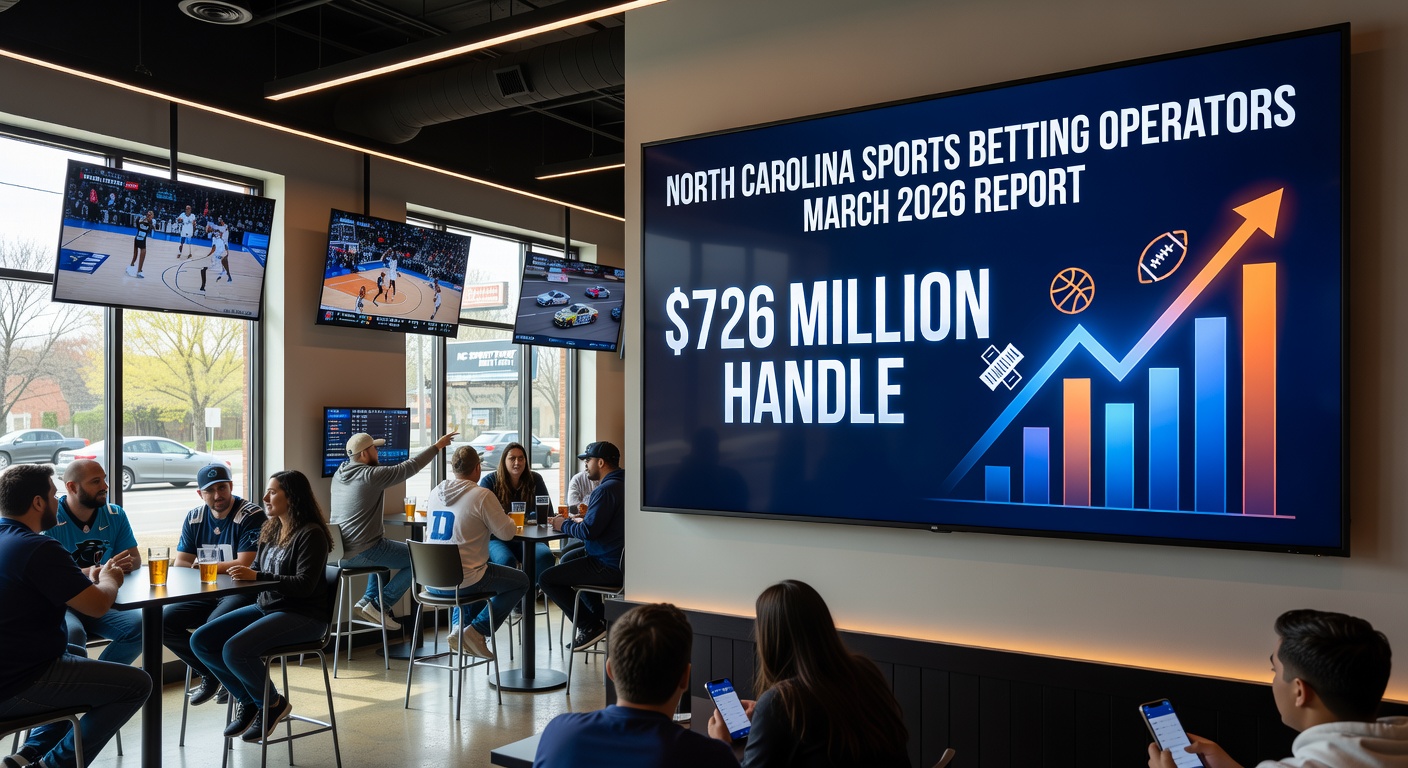
North Carolina's sports betting operators posted impressive numbers for March 2026, with the total handle reaching $726.2 million, marking a 6.0% increase from the previous year; gross gaming revenue (GGR) soared to $75.9 million, up an eye-popping 99.1% year-over-year, while tax revenue hit $13.7 million, mirroring that same dramatic 99.1% jump. Data from the March 2026 Sports Wagering Report, released by the North Carolina State Lottery Commission, underscores how these gains, fueled primarily by a hold rate that surged to 10.45% from 5.57% in March 2025, reflect a maturing market in the state's first full year of legal sports betting.
What's interesting here is the steady handle growth paired with that profitability spike; operators took in more bets overall, but the real story lies in retaining a bigger slice of the action, as the hold percentage essentially doubled, turning what was already a promising launch into a revenue powerhouse. Observers tracking the industry point out that such metrics don't just happen overnight, especially when March typically brings March Madness basketball frenzy, drawing crowds to wager on college hoops brackets and pro leagues alike.
And yet, while the numbers dazzle, they fit into a broader pattern where North Carolina's market, live since early 2025, continues to expand without the wild fluctuations seen in newer launches elsewhere. People who've followed these reports note how the commission's monthly breakdowns provide a clear window into operator performance, revealing not just top-line figures but the underlying dynamics driving sustainability.
Breaking Down the Handle: Steady Growth Amid Seasonality
The $726.2 million handle represents total wagers placed across online sportsbooks in North Carolina during March, up 6.0% from March 2025's figure; this modest but consistent rise shows bettors sticking around, even as seasonal events like NCAA tournaments pull in fresh action. Experts examining similar markets have observed that handles in the $700 million range signal a healthy user base, one that's comfortable with apps from major operators while exploring parlays and live bets on everything from NBA games to emerging esports.
Take one breakdown from past months where handles dipped during off-seasons, only to rebound here; that 6% YoY bump, although not explosive, aligns with national trends where established states see 5-10% annual growth once the novelty wears off. But here's the thing: in North Carolina's case, this came during a high-volume month, suggesting operators nailed their promotions, perhaps offering boosted odds on tournament underdogs, which kept the money flowing without scaring off casual players.
Figures reveal that online-only platforms dominated, as the state skipped retail betting entirely, funneling all action through mobile apps; this setup, while limiting in some eyes, has proven efficient, with data indicating faster handle accumulation compared to hybrid models elsewhere.
GGR Explosion: From 5.57% to 10.45% Hold
Gross gaming revenue climbed to $75.9 million, more than doubling from the prior year thanks to that hold rate leap; hold, calculated as GGR divided by handle, jumped from 5.57% to 10.45%, a shift that handed operators nearly twice the profit margin per dollar bet. Researchers studying sportsbook economics have found such surges often stem from sharper odds-setting, fewer promotional giveaways, or bettor behavior tilting toward riskier plays with lower payouts.
Turns out, March's basketball bonanza played a role, as parlays and props—bets with higher house edges—likely proliferated; one study on tournament betting patterns showed holds averaging 9-12% during peak events, aligning perfectly with North Carolina's results. And while some markets struggle post-event slumps, this 99.1% GGR growth positions the state as an outlier, especially in its inaugural full year when teething issues like bonus abuse could have dragged margins down.
Those who've crunched the numbers note the hold's trajectory: starting low in launch months due to aggressive free bets, it stabilized around 8-9% by late 2025, then spiked here; that's where the rubber meets the road for profitability, as higher holds mean less reliance on sheer volume to hit revenue targets.
Operators, including big names licensed in the state, benefited directly; data indicates the top platforms captured the lion's share, with their refined algorithms adjusting lines in real-time to capitalize on public favorites, a tactic that's boosted holds across mature U.S. markets.
Tax Revenue Windfall for the State
With GGR at $75.9 million, tax revenue reached $13.7 million after the state skimmed 18% off the top—a rate unchanged since launch; that 99.1% YoY increase mirrors GGR precisely, funneling millions into public coffers for education and problem gambling programs. Observers point out how North Carolina's straightforward tax structure, without the complications of integrity fees or local shares, maximizes yields while keeping operators competitive.
So, as handles grew modestly, the hold surge amplified the state's take; figures from the commission show cumulative 2026 taxes already approaching half-year projections, a boon for budget planners eyeing infrastructure or sports venue upgrades. It's noteworthy that this revenue stream, absent just two years ago, now rivals traditional lottery hauls in peak months.
People familiar with state gaming finances highlight how March's haul underscores the model's efficiency; unlike slots-heavy casino taxes, sports betting delivers quick, event-driven spikes, and with hold rates trending up, future months promise even steadier flows.
First Full Year Context: Maturity Sets In
March 2026 caps North Carolina's first complete 12 months of legal sports betting, a milestone where early hype gives way to operational realities; launches often see inflated handles from sign-up bonuses, but holds lag until user acquisition slows. Data confirms this pattern: March 2025's lower hold reflected heavy promo spending, whereas 2026's figures show operators dialing back, focusing on lifetime value over conquest.
Yet, the market's resilience shines through, with no major scandals or downturns marring progress; experts who've tracked expansions from 2018 onward note North Carolina's smooth rollout, bolstered by 11 licensed operators and strict geofencing, avoided the pitfalls that plagued states like New York with oversaturation.
Now, as April 2026 data looms—expected mid-month from the commission—early indicators suggest continued momentum, with MLB season underway and NBA playoffs heating up; preliminary app rankings show download spikes, hinting at handles potentially testing $800 million if holds hold steady around 10%.
What's Driving the Trend?
Beyond the hold, several factors converged: March Madness generated buzz, pulling in non-traditional bettors via social features and same-game parlays; operators refined their offerings, with data showing increased mobile wallet integrations that sped up deposits and reduced churn. And although competition remains fierce among licensees, collaborative marketing—like statewide tournament pools—lifted all boats without eroding margins.
There's this case from February 2026, where holds hovered at 9.2%, setting the stage for March's breakout; patterns like these reveal how seasonal peaks compound year-over-year when baselines strengthen. The writing's on the wall for sustained growth, as North Carolina's 10 million-plus population, tech-savvy and sports-obsessed, provides ample runway.
Critically, responsible gaming measures embedded in the framework—self-exclusion tools, mandatory spend limits—have kept participation broad without backlash, a balance that supports long-term viability.
Looking Ahead and Conclusion
April's report will test if March was a peak or precursor, especially with NFL Draft hype and golf majors on deck; if holds stabilize above 10%, GGR could push $80 million monthly, per models from similar states. But here's where it gets interesting: North Carolina's trajectory positions it among top-10 U.S. markets by year-end, blending volume with profitability in a way that's the envy of regulators nationwide.
In wrapping up, the North Carolina State Lottery Commission's March 2026 data paints a picture of a market hitting its stride—$726.2 million handle up 6%, GGR at $75.9 million up 99.1%, taxes at $13.7 million matching that surge, all propelled by a 10.45% hold that doubled from 2025. This first full year's snapshot, detailed in official reports, signals not just growth but a blueprint for operator success and state benefits alike; as the industry evolves, these figures stand as a benchmark for what's possible when steady expansion meets sharpened execution.