How Accumulator Boost Mechanics Reshape Engagement Cycles in European Football Markets
Written by Sofia Franke · Jun 1, 2026
How Accumulator Boost Mechanics Reshape Engagement Cycles in European Football Markets
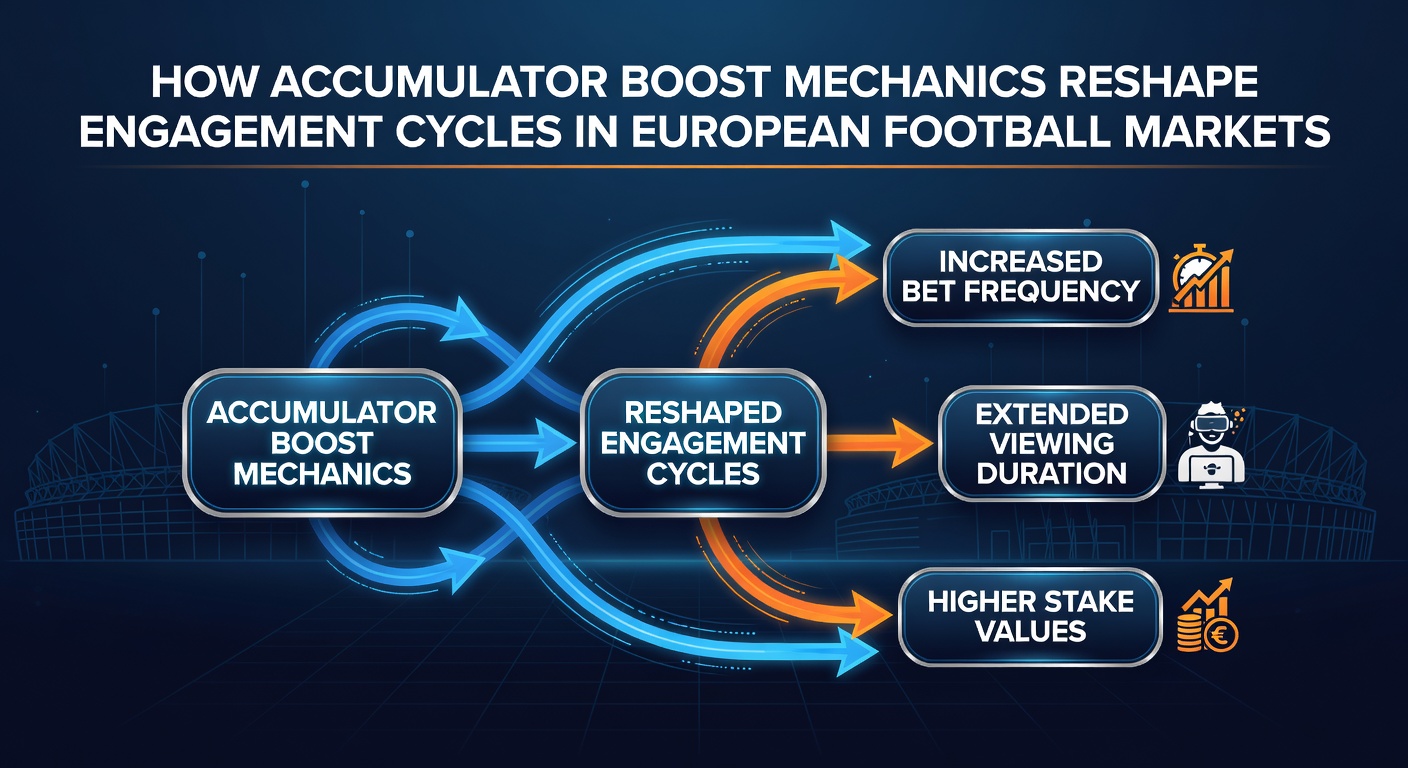
Accumulator boost mechanics have gained traction across European football markets as operators layer enhanced returns onto multi-selection wagers, and these mechanics connect initial user entries to extended sequences of activity that stretch across matchdays and seasons. Data from industry analyses shows that boosts typically multiply payouts on accumulators containing four or more legs drawn from leagues such as the Premier League, La Liga, Bundesliga, and Serie A, while the structure encourages bettors to select additional fixtures rather than stopping after single-match wagers.
Core Components of Accumulator Boost Systems
European platforms apply percentage-based uplifts or fixed bonus amounts once an accumulator reaches a minimum number of selections, and these thresholds often sit at four, five, or six legs depending on the operator and market regulations. Researchers tracking transaction logs across regulated jurisdictions note that users who activate a boost on a Saturday afternoon card frequently return later the same evening or the following midweek round to test new combinations built around updated team news and injury reports. The mechanics therefore stretch engagement cycles beyond isolated events into recurring patterns that align with the dense European football calendar.
Impact on User Progression and Retention Patterns
Studies compiled by academic groups examining digital wagering behaviors indicate that accumulator boosts accelerate movement from entry-level promotions into sustained platform use, because each successful boosted payout resets visibility of further offers that require additional qualifying stakes. In markets such as Germany and the Netherlands, where licensing frameworks require clear separation between promotional mechanics and core betting products, operators must display boost terms before stake confirmation, yet participation rates remain elevated during peak fixture periods. Observers tracking session lengths report that average time spent on platform interfaces increases when users build and adjust accumulators in real time using live odds feeds that incorporate boost multipliers.
Seasonal Fluctuations Observed in 2026
Figures released ahead of the June 2026 international window reveal that accumulator boost uptake climbed sharply during the final weeks of domestic leagues, as bettors constructed cross-league combinations ahead of the FIFA World Cup qualifying schedule. Regulatory summaries from the Malta Gaming Authority and parallel data sets compiled in Sweden show that boosted accumulators accounted for a larger share of total handle compared with earlier months, while repeat login frequency rose among accounts that had previously triggered a boost payout. These patterns suggest that the mechanic functions as a bridge between one-off football weekends and longer engagement arcs that carry users through quieter periods between major tournaments.
Comparative Data Across Key Markets
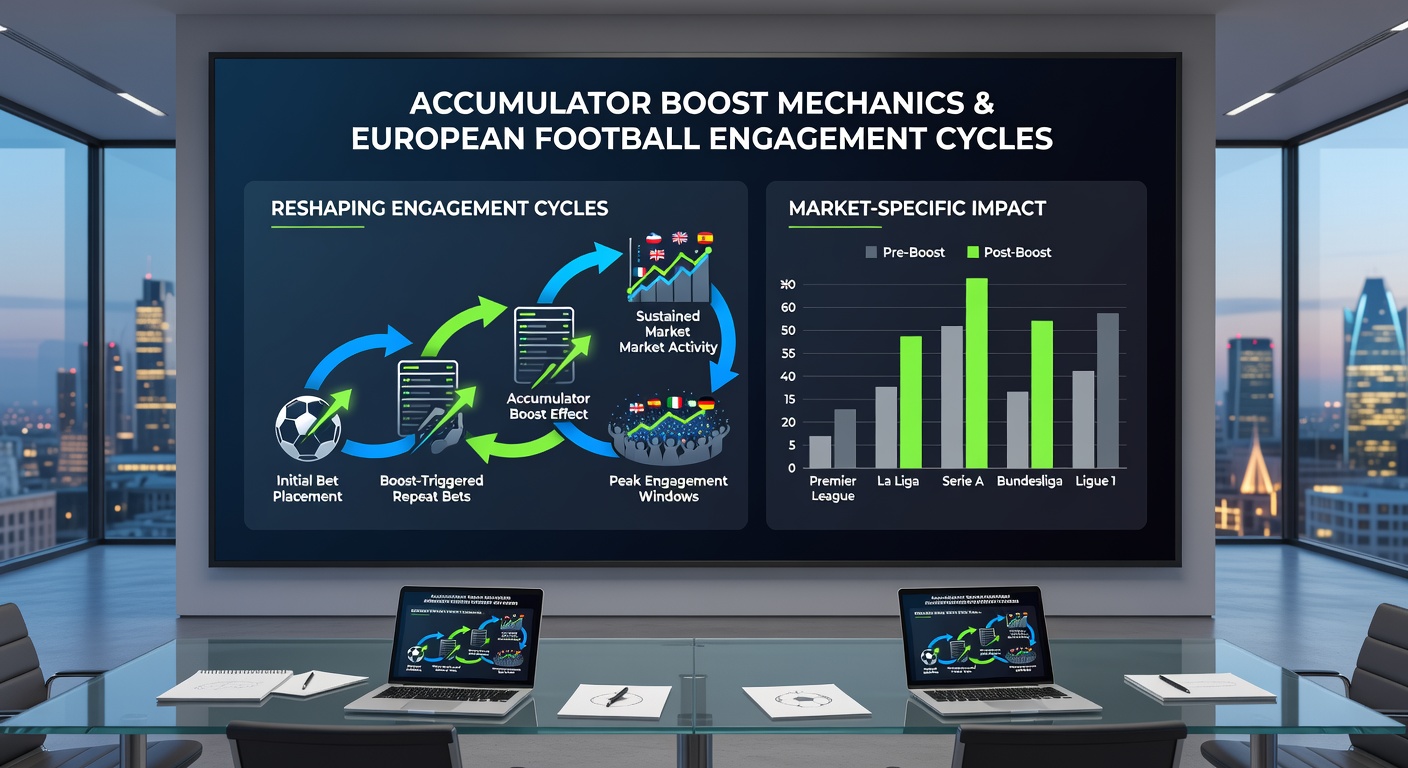
Industry reports produced by the European Gaming and Betting Association document differences in how accumulator boosts interact with local tax structures and responsible gambling tools, and these differences influence the speed at which users cycle through deposit and withdrawal sequences. In Spain, where the Directorate General for the Regulation of Gambling maintains granular reporting requirements, boosted accumulator volume grew steadily through spring 2026 without corresponding spikes in single-bet activity, indicating that the mechanic channels attention toward multi-leg products rather than dispersing it across simpler wager types. French operators operating under ARJEL oversight report similar concentration effects, although the mandatory display of theoretical return percentages tempers the perceived value of boosts when users review historical performance data.
Integration With Broader Promotional Ecosystems
Platforms frequently position accumulator boosts alongside loyalty ladders and cashback tiers, so that a boosted payout contributes toward weekly activity targets that unlock additional reward layers. Transaction data examined by research teams at several European universities illustrates that users who combine accumulator boosts with reload bonuses maintain higher weekly stake volumes over twelve-week observation windows than those who engage only with standalone promotions. The sequencing creates feedback loops in which each completed accumulator cycle feeds eligibility for the next tier, extending the time users remain within the active engagement window rather than lapsing after an initial trial period.
Regulatory and Operational Considerations
European licensing regimes require operators to audit boost mechanics for fairness and to publish clear eligibility rules, and compliance teams have responded by embedding automated checks that prevent stacking of incompatible offers. Reports from the Belgian Gaming Commission and the Danish Gambling Authority highlight that transparent communication of boost calculation methods correlates with lower dispute volumes, while still allowing the promotional layer to influence bet construction choices. These frameworks continue to evolve as new data on user behavior becomes available through mandatory reporting channels that aggregate activity across multiple operators.
Conclusion
Accumulator boost mechanics have become embedded features within European football betting ecosystems, and available evidence shows they lengthen engagement cycles by linking successive matchdays through progressive reward structures. Market data collected through mid-2026 indicates sustained uptake across major leagues, with variations driven by local regulatory environments and the density of the fixture calendar. As platforms refine calculation methods and integrate boosts more tightly with loyalty systems, the patterns of user activity they generate will likely remain a central element of operator strategies in regulated European markets.