Conditional Reward Tiers Driving Retention Trends in Regulated Asian Betting Markets
Written by Lars Ludwig · Jul 11, 2026
Conditional Reward Tiers Driving Retention Trends in Regulated Asian Betting Markets
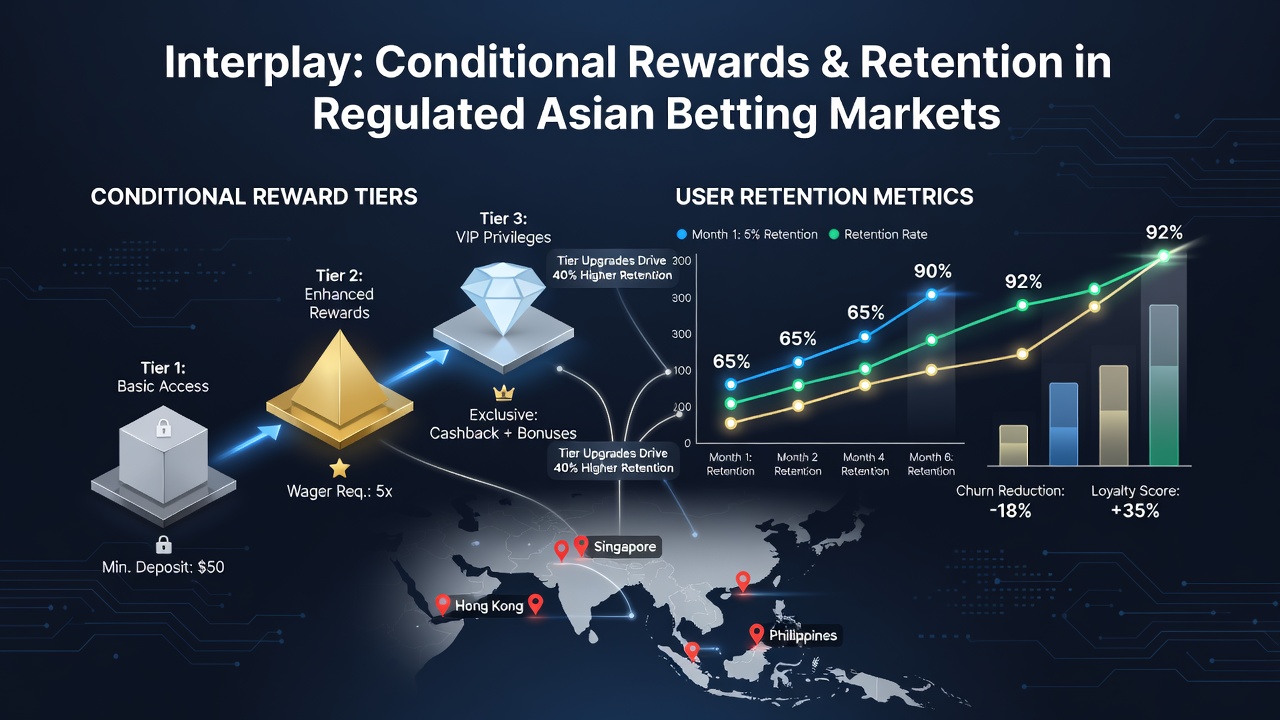
Regulated betting markets across Asia present layered reward systems that tie user activity to specific conditions such as minimum deposit volumes, wager frequencies, and loyalty milestones. Operators in jurisdictions like Singapore, Japan, and the Philippines structure these tiers to align with local compliance rules while tracking retention through metrics including session duration, repeat deposit rates, and churn percentages. Data from mid-2026 indicates that users who advance through conditional tiers show measurable differences in long-term platform engagement compared with those who remain at entry levels.
Defining Conditional Reward Structures
Conditional reward tiers require users to meet predefined thresholds before accessing escalated benefits such as enhanced odds, cashback percentages, or exclusive event access. Researchers at the National University of Singapore documented how these conditions typically escalate across four to six levels, with each stage demanding higher cumulative stakes or consistent weekly activity. Operators enforce these rules through automated tracking systems that reset or adjust based on compliance audits conducted by bodies like the Gambling Regulatory Authority of Singapore.
Take one operator in the Philippines who implemented tiered cashback that activates only after a user completes 50 qualifying bets within a calendar month. Figures reveal that participants reaching the second tier maintained deposit activity at rates 18 percent above baseline users during the same period. Such structures integrate directly with retention dashboards that flag drops in engagement when users stall at lower levels.
Key Retention Metrics Under Examination
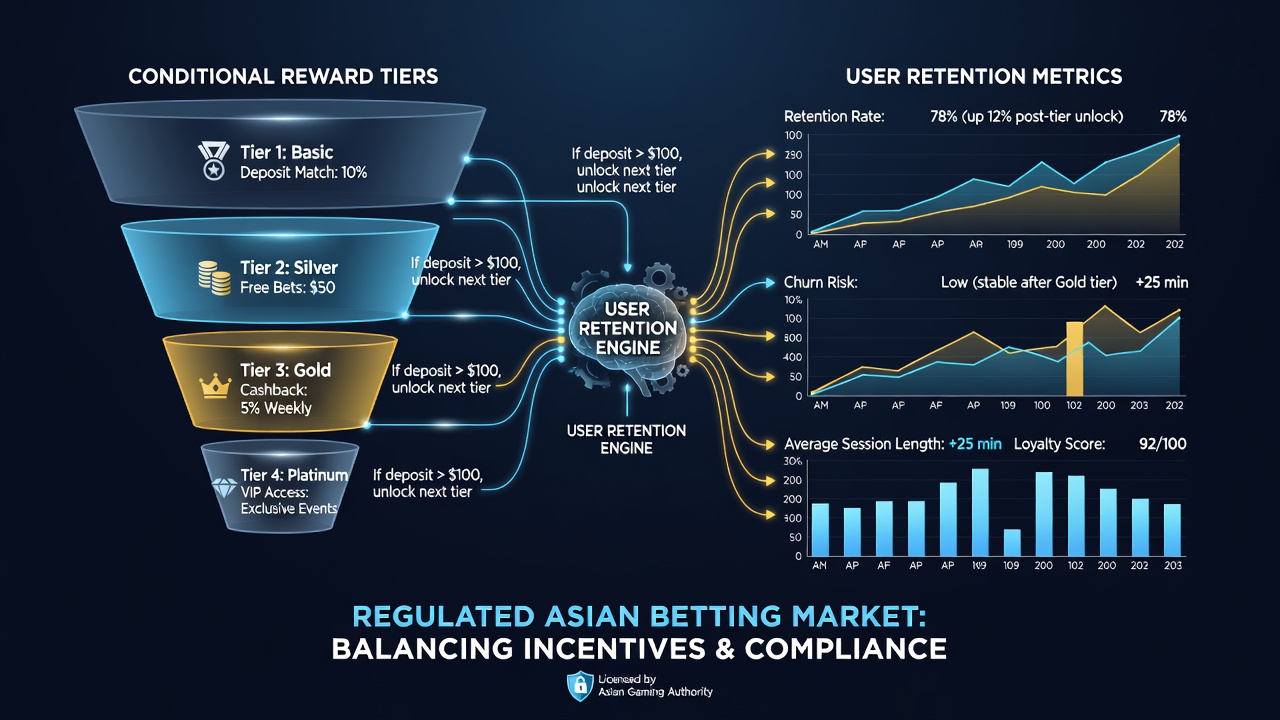
Retention analysis in these markets centers on several core indicators. Monthly active user ratios, average revenue per user, and lifetime value calculations form the primary set, while secondary measures track progression velocity between tiers and the incidence of tier demotion due to inactivity. July 2026 reports from regional platforms highlighted that users completing conditional entry requirements within the first 14 days posted 27 percent higher retention at the 90-day mark than those who delayed or skipped initial conditions.
Studies further separate voluntary retention from enforced patterns created by tier lockouts. When conditions include time-bound windows for qualification, platforms record spikes in activity followed by stabilization once users secure their status. Observers note that demotion events correlate with accelerated churn, prompting operators to introduce grace periods that soften abrupt drops without violating regulatory caps on promotional intensity.
Regional Patterns and Compliance Influences
Market variations shape how conditional tiers interact with retention data. In Japan, strict advertising limits and deposit caps encourage operators to emphasize milestone-based rewards that reward consistent small-stake play rather than large single deposits. South Korean platforms, operating under tighter cross-border restrictions, focus on internal progression systems where tier advancement unlocks localized content such as regional sports events. Philippine operators, guided by PAGCOR oversight, blend tier conditions with reload structures that tie directly to verified identity checks.
What's interesting is how these regional rules produce distinct retention curves. Platforms in markets with higher compliance scrutiny show slower tier progression yet steadier long-term retention once users clear early conditions. In contrast, environments with more flexible promotional windows record faster initial climbs but higher rates of mid-tier drop-off when users fail to sustain the required activity pace.
Interconnected Effects on User Journeys
The interplay appears most clearly when tracking cohorts through sequential tiers. Users who receive conditional bonuses upon reaching the second or third level demonstrate extended session lengths and diversified betting categories, moving from single-sport wagers to multi-platform participation. Data shows that conditional access to VIP tools such as advanced analytics or priority withdrawals further anchors retention, provided the conditions remain transparent and achievable within regulatory boundaries.
One study released in early 2026 tracked 12,000 accounts across three Asian operators and found that each completed tier condition reduced the probability of 30-day churn by an average of 9 percent. Yet the same analysis indicated diminishing returns beyond the fourth tier, where additional conditions sometimes coincided with plateaued engagement if the rewards failed to match increased user expectations. Operators respond by calibrating thresholds based on aggregated retention signals rather than fixed formulas.
Conclusion
Conditional reward tiers and retention metrics in regulated Asian betting markets form a feedback loop where compliance requirements, user progression data, and operational adjustments continuously influence one another. Evidence from 2026 demonstrates measurable links between tier completion and sustained activity, while regional regulatory differences produce varied patterns in how those links manifest. Platforms that align conditional structures with observable retention indicators maintain steadier user bases across fluctuating market conditions.